Apr 29, 2026
Articles
What is RNG in iGaming? - Random Number Generators Explained
This article explains what RNG means in iGaming, how random number generators work, and why testing, certification and platform integrity matter for fair online casino play.

What does RNG mean in iGaming?
How does RNG work in online casino games?
PRNG vs TRNG: which type of RNG does iGaming use?
Which iGaming games use RNG?
Why RNG matters for fairness and compliance
How RNG testing and certification work
RNG vs RTP: what is the difference?
Common myths about RNG in iGaming
Final thoughts
If you are new to online casino technology, one of the first terms you will come across is RNG. So, what is RNG in iGaming? In simple terms, RNG stands for Random Number Generator, the system that creates the unpredictable outcomes behind most digital casino games.
It determines where slot reels stop, which card appears next in virtual blackjack, which number lands in online roulette, whether a bonus round is triggered, or how an instant win result is generated. Without RNG, online gambling would not be able to deliver the fairness, independence and consistency that players, operators and regulators expect.
What does RNG mean in iGaming?
A Random Number Generator is a piece of software, and sometimes a combination of software and hardware, that produces sequences of numbers with no detectable pattern. In iGaming, those numbers are then translated into visible game outcomes. That might mean a specific symbol combination on a slot, a shuffled virtual deck in blackjack, or a winning number in roulette.
The key point is that the outcome is generated independently. It is not chosen manually by the operator, and it is not influenced by what happened in the previous round.
This matters because digital casino games cannot rely on physical randomness in the same way a land-based casino can. A live roulette wheel or a hand-shuffled deck creates uncertainty through physical action. An online game needs a technical equivalent, and that is exactly what RNG provides.
For operators building regulated products, working with an experienced iGaming software provider is important because fairness depends on more than the game mechanic itself. It also depends on the delivery environment, the certification process, the integrity of integrations, and the compliance framework around the product.
How does RNG work in online casino games?
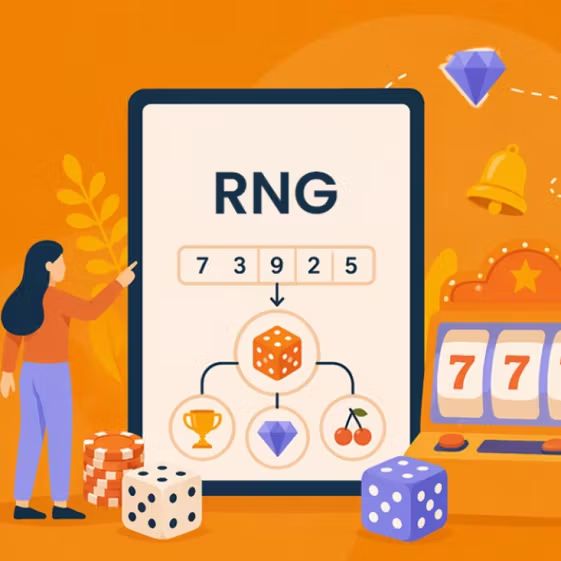
At a basic level, an RNG continuously generates numbers in the background. The moment a player clicks spin, deal or play, the game captures one of those values and maps it to a result according to the rules of the game.
In a slot, that number might correspond to reel positions and symbol combinations. In virtual roulette, it maps to one of the wheel numbers. In digital card games, it can be used to create a shuffled deck and determine the order of cards dealt.
What players see on screen is the visual representation of that process. The spinning reels or animated wheel are not “deciding” the result in real time. The outcome has already been determined by the RNG and the game maths behind it.
This is one reason licensed iGaming products can offer fast, scalable gameplay across thousands of simultaneous sessions without sacrificing consistency. The randomness sits inside the game logic, while the front-end animation simply presents the result in a way that feels natural to the player.
PRNG vs TRNG: which type of RNG does iGaming use?
Most online casino games use a PRNG, or pseudo-random number generator. That can sound worrying at first, but it should not. In regulated gaming, “pseudo-random” does not mean rigged. It means the system uses an algorithm and a seed value to generate outputs that are statistically random and computationally infeasible to predict without knowledge of the algorithm, seed and internal state.
Regulators and test labs focus heavily on exactly this point. A compliant PRNG needs to produce outcomes that are unbiased, unpredictable and resistant to manipulation. Weak seeding, repeatable output streams or predictable patterns would create obvious risks, which is why RNG testing looks at both the statistical behaviour of the output and the way the system has been implemented.
TRNG, or true random number generation, is based on physical noise or hardware events. Some systems use hybrid approaches, combining hardware entropy with software generation. In practice, PRNGs dominate digital iGaming because they are fast, scalable and reliable for game deployment, while still meeting fairness requirements when properly designed, tested and certified.
That is why the conversation around RNG in iGaming is usually less about whether a system is “truly” random in a philosophical sense, and more about whether it is unbiased, unpredictable, independently verified and suitable for regulated gaming environments.
Which iGaming games use RNG?
RNG is used across most non-live online casino content. Slots are the clearest example, but the same principle applies to virtual roulette, video poker, digital blackjack, baccarat, bingo, keno, lottery-style games, crash games, instant win titles and many casual casino products.
Wherever the game outcome is created by software rather than physical action, RNG is usually involved.
The main exception is live dealer gaming, where the randomness often comes from real equipment and real human action, such as a dealer shuffling cards or spinning a roulette wheel. Even there, some hybrid products can combine physical presentation with digital mechanics.
For operators expanding their game portfolio, this distinction matters. A robust turnkey iGaming platform should support certified RNG-based content, live dealer integrations and the wider operational tools needed to deliver casino products across different markets, jurisdictions and player segments.
Why RNG matters for fairness and compliance
The commercial value of RNG is obvious, but the real importance of RNG in iGaming lies in fairness and trust. The UK Gambling Commission states that random number generation and game results must be “acceptably random”, meaning they should be shown, with a high degree of confidence, to be random through recognised statistical analysis and testing methods. It also expects random outcomes to avoid adaptive behaviour, meaning games should not compensate for previous results or adjust outcomes in a way that undermines randomness.
For operators, that turns RNG from a technical feature into a compliance issue. In Great Britain, for example, licence holders must submit games and RNG test results through the games register before relevant products are released for play.
In other words, fairness is not something a brand can simply claim in marketing copy. It has to be evidenced.
This is also why the underlying online casino platform matters. Even the best game content needs the right platform environment for integration, monitoring, version control and regulated deployment. When operators talk about building trust, RNG is part of the picture, but so is the architecture that helps certified content run correctly and consistently.
How RNG testing and certification work
RNG testing usually involves far more than pressing spin a few thousand times and checking whether the results “look random”. Independent labs can review source code, assess the seed and re-seeding approach, run statistical analysis on large output samples, test outcome distributions, and check whether security weaknesses could make results predictable or open to manipulation.
GLI lists source code review, RNG period assessment, RNG range determination, seeding and re-seeding checks, background cycling inspection and outcome distribution tests among the typical elements of RNG evaluation. eCOGRA also describes RNG certification as a process designed to verify that online gambling systems generate outcomes that are unpredictable and unbiased.
This third-party certification is one of the clearest trust signals in iGaming. It moves a provider from saying a game is fair to showing that it has been independently reviewed against recognised standards.
That is why strong competitor content on this topic consistently ties RNG to certification, fairness and player confidence. In regulated iGaming, those ideas belong together.
RNG vs RTP: what is the difference?
RNG and RTP are often mentioned together, but they are not the same thing. RNG determines the outcome of each individual round. RTP, or Return to Player, is a long-term mathematical percentage that indicates how much a game is expected to return to players over a very large sample of rounds.
One governs randomness and independence on a round-by-round basis. The other describes expected payout behaviour over time.
That distinction matters for both SEO clarity and player education. A game can have a 96% RTP and still deliver long losing streaks in the short term, because the RNG does not “owe” the player a win. Each round remains independent.
Confusing RNG with RTP is one of the most common misunderstandings in online casino content, so it is worth addressing directly in any article explaining how digital casino games work.
Common myths about RNG in iGaming
One of the biggest myths is that a slot is “due” to pay out after a cold run, or that a recent winner makes the next spin less likely to hit. That is not how certified RNG systems work. Because each outcome is generated independently, previous spins do not change the probability of the next one.
Streaks can happen, but streaks are not evidence of manipulation. They are part of what randomness looks like in practice.
Another myth is that online casinos can simply adjust results in real time for individual players. In regulated environments, that would conflict with testing, certification and regulatory requirements around randomness and fairness.
The more accurate concern for operators is not whether RNG can be casually tweaked on demand. It is whether the certified version of a game has been implemented correctly, monitored properly and maintained across markets without introducing technical or compliance risk.
Final thoughts
So, what is RNG in iGaming? It is the mathematical and technical backbone of most digital casino games, turning software into fair, unpredictable play.
It powers everything from slot spins to virtual table games, supports player trust, underpins certification and plays a central role in regulatory compliance. For players, RNG helps ensure that digital outcomes are independent. For operators, it is a core part of product integrity, platform reliability and long-term trust in the casino experience.